Having more than 25 years of experience in successful network projects dedicated to coffee, I strongly recommend that the management of retail chains do not waste time reviewing fragmentary telemetry developments but roll up their sleeves and create their own automated coffee business management systems.” – Alexander Kuzmin on one of the growing sales markets.
AUTHOR BIO
He is an expert on practical transformations in the non-fuel businesses of large Russian gas station chains.
He is a member of the Expert Council of the Russian Duma’s Energy Committee.

Coffee-to-go is one of the few segments of the catering market that has been growing in the past few years.
The abundance of traditional coffee houses does not prevent this growth. Automated coffee points that work without a barista salesperson take up 1.5–2 square meters where an ordinary coffee shop is problematic or unprofitable.
It is important to note that this line of business has many unfilled niches, including offices of large companies and bank branches, multifunctional centers for public services and communication stores, waiting rooms for passenger transport hubs, and Russian Post offices.
Even among gas station chains, whereas a rule the coffee business has already been created, in 80% of cases, it is both necessary and possible to radically improve it. This is because the technological coffee-to-go solutions they use often do not meet modern market demands.
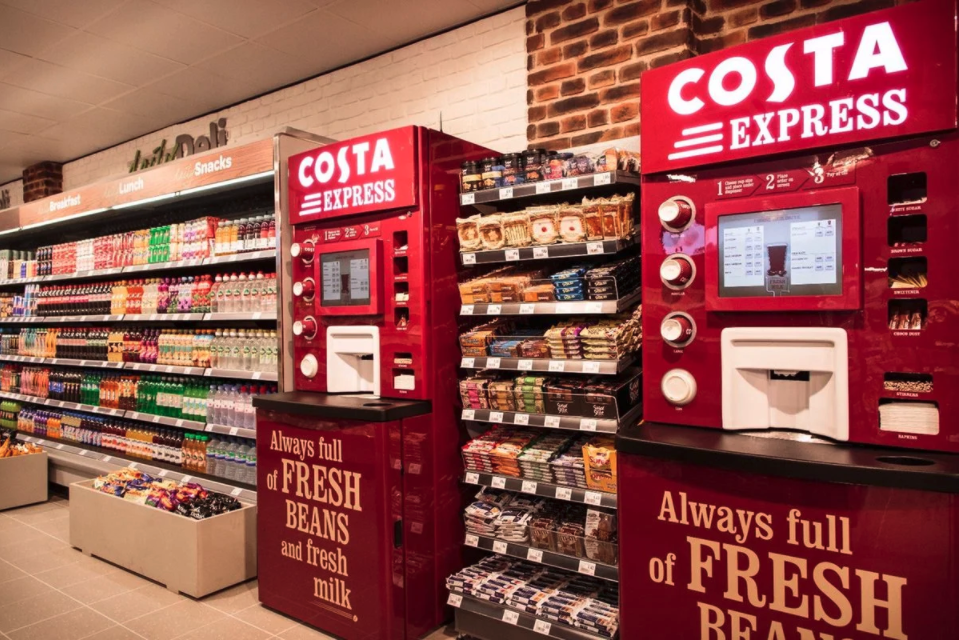
The largest coffee-to-go niche and its scale are global, is chain retail. Indeed, most retail chains around the world today do not have their own coffee solutions, including companies like Walmart, Costco, or Carrefour, which have tens of thousands of shopping malls, are all without exception on the path of launching rental shop-in-shop coffee islands from Starbucks, Costa, and other coffee companies.
In this regard, the value of the customers’ belief that companies like Magnit, Tesco, or Auchan do not only offer an affordable range of products but also fine coffee, is clearly underestimated by both the top management and marketing specialists of these retail chains.
Why don’t retail chains develop their own coffee solutions?
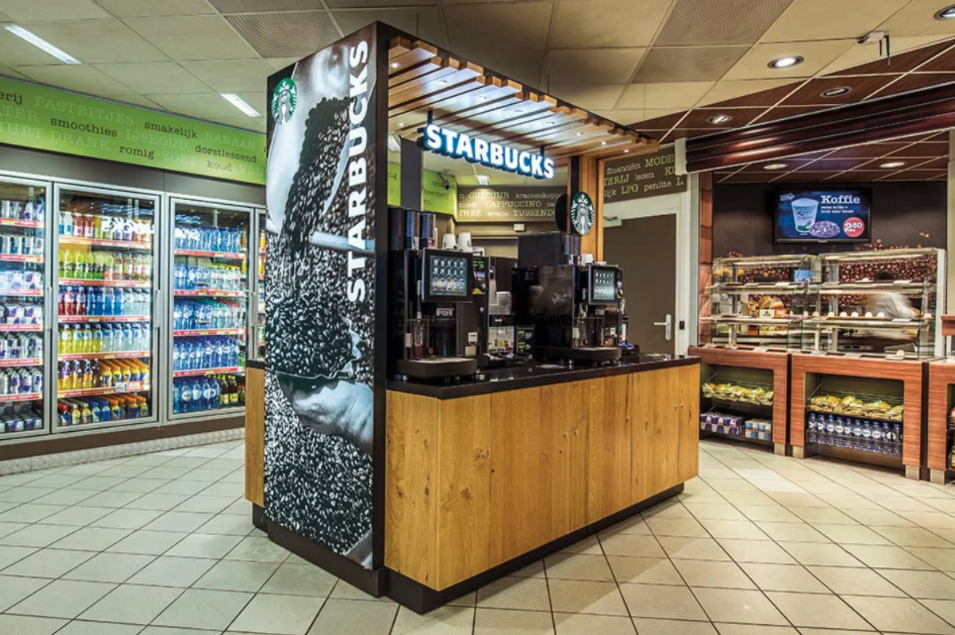
Why do they allow third-party tenants to parasitize on their client traffic?
There are several reasons for this:
1. The world’s top consultants who work with retail leaders always make recommendations for the benefit of global coffee chains, primarily Starbucks. Naturally, they don’t do it for free.
2. The strategic managements of retail chains receive initial information and sample business cases from top consultants and blindly follow the recommendations of these “market experts.”
3. The decision-makers of large retail chains have no expertise in organizing the coffee business in all retail outlets other than to entrust these sites to third-party tenants recommended by these consultants.
4. The market for comprehensive technological solutions is just taking shape. Managers who might constructively influence the situation have no idea what tools to use to build their own coffee business.
If the top manager does not understand the difference between a coffee vending device and a fully automatic professional coffee machine, then they will most likely not be able to choose either the right set of equipment or effective contractors to realize a coffee project for their own retail chain.
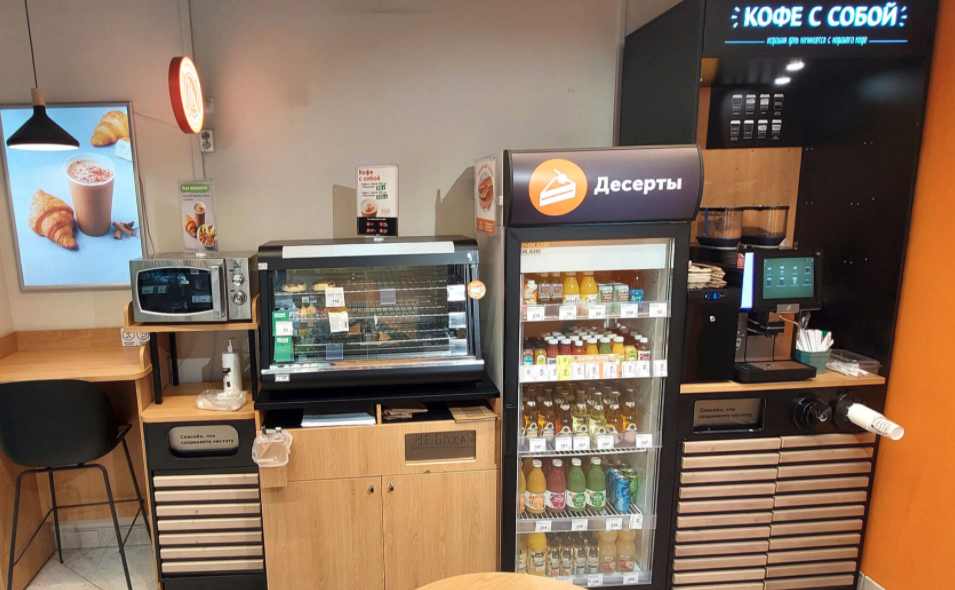
Leaving the first three reasons to the professional conscience and the IQ of those who found themselves at the helm of large retail structures, I would like to focus on the fourth, technological, reason for the existing “coffee vacuum” in retail chains.
Modern information technologies have triggered the global trend to digitalize all types of activities. They have not ignored the sale of coffee to go. Today no one doubts the fact that hundreds, sometimes thousands, of automated coffee points operated without salespeople require IT solutions for their centralized management. One of the tools for such management is the remote monitoring of coffee machines.
Under this obscure term, many developers suggest to the owners of automatic coffee machines that they need to “make a breakthrough in the digitalization of their coffee business.”
Before spending money, however, it is very important for the owner of coffee points to understand what the aims of such digital innovations as remote monitoring of coffee machines on their network’s trading floors are.
I believe the sole goal of any retail chain considering such innovations ought to be the increase in coffee sales (or increase the percentage of client traffic covered by purchases of coffee drinks).
It was not for nothing that I touched upon this aspect of the introduction of remote monitoring. Many solutions (and there are enough on the market already) do not have this as their main goal. Sometimes it does not even exist.
For example, all the telemetry products of European coffee machine manufacturers have a priority focus on the sale of services and original spare parts. In fact, they are a kind of “auto-order”, reminding the owner of the coffee machine when it is time to order periodic maintenance or carry out the routine replacement of certain parts of the operating equipment. Does the owner of a gas station or coffee shop really need such a telemetry option? Experience shows that they do not.
Many other developments have as their core function the gathering of statistical data from one or more coffee machines without the possibility of generating group management reports allowing central office managers to receive information systematized in strict accordance with their requests.
Nine out of ten fully automatic professional coffee machine (PCM) monitoring solutions involve a one-way “PCM-server” information flow. Only a few IT products allow for a two-way, “PCM-Server-PCM,” which is critical for the effective operation of any remote control system.
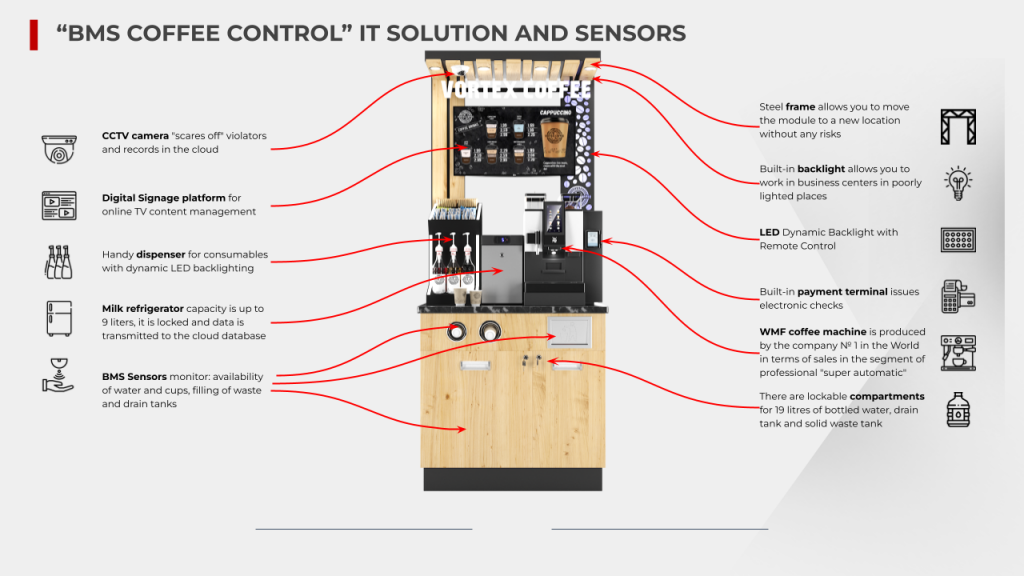
Another important point: most sellers of IT solutions discuss the “remote monitoring of coffee machines” with their potential customer when the effective management of a coffee business requires “remote monitoring of the coffee sale area.” This is due to the fact that control parameters such as the presence of glasses in dispensers, the presence of water in supply containers, monitoring the status of water filters, and the managing of the content of an external electronic menu, have a major impact on the sales of coffee drinks.
An extremely effective management function is the availability of mobile options for connecting different users to the monitoring system and reporting on events occurring in the retail chain coffee business perimeter.
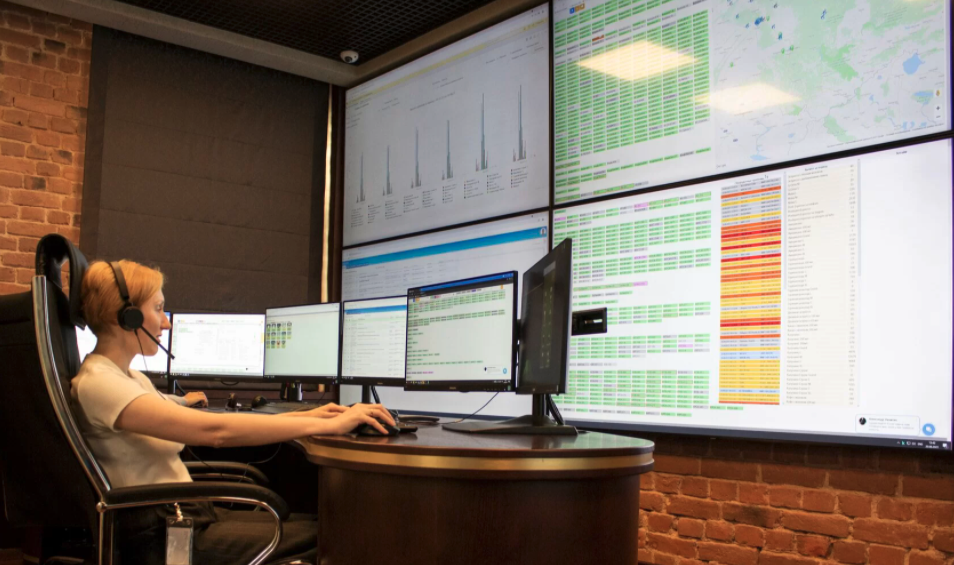
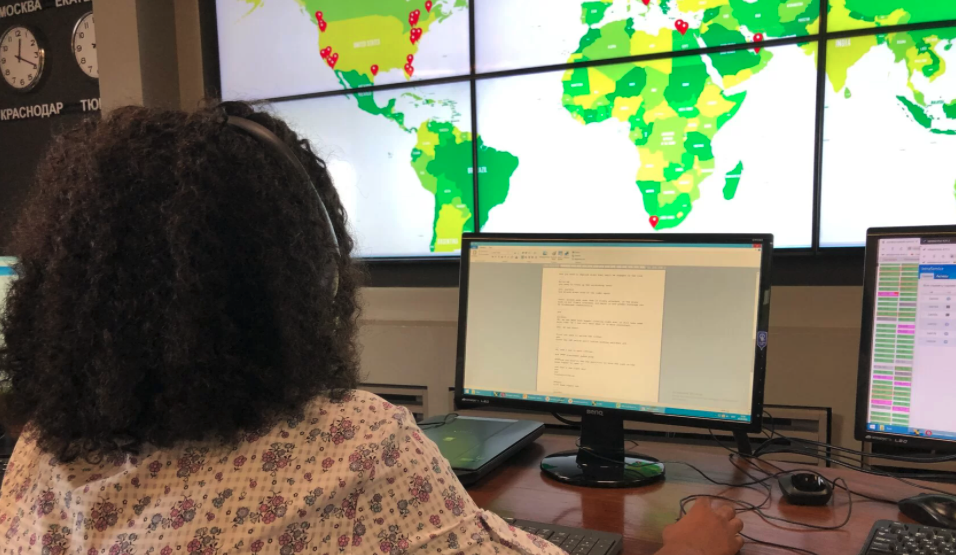
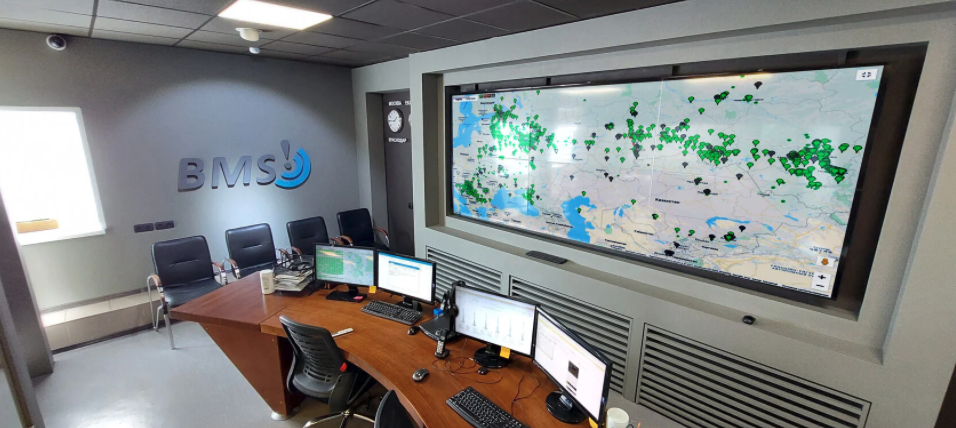
My many years of experience in managing the coffee business for various network clients has convinced me that telemetry options work effectively only if there is a 24-hour dispatch monitoring center (MC) with multi-level technical support (at least two levels). When a customer has 200+ points of sale, it is advisable to create such dispatch monitoring centers for each customer and locate them in secure data centers.
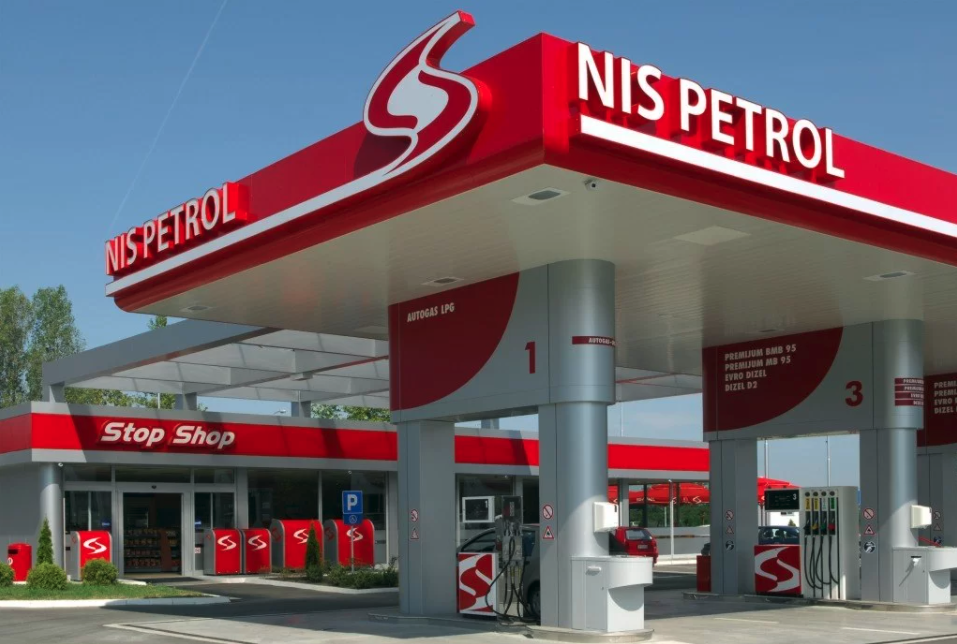
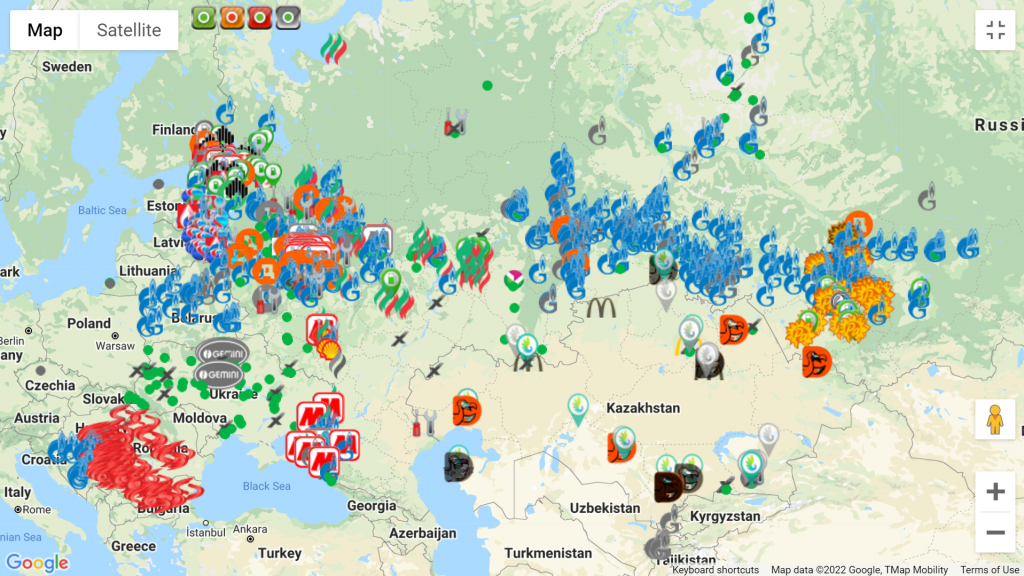
Examples of the creation of individual Monitoring Centers for the dispatch management of a chain coffee business include the following: the Monitoring Center (MC) for the Infrastructure of the Gazprom Neft gas station chain (Russian Federation, Belarus, neighboring countries), the MC for the coffee business of the NIS gas station chain (Serbia, Bosnia, Bulgaria, Romania), and the United MC for RusHOLTS (Magnit, Dixy, VkusVill, DoDo, Surgutneftegaz gas stations + about 400 other customers).
So far, there are only two coffee business management systems like the one I have described. These are The Grid by British Costa Express (owned since 2019 by Coca-Cola), and BMS Coffee Control, which is in the public domain and is offered to customers for implementation under their own brands.
Scott Martin, who created The Grid in England, sold it with his coffee company Coffee Nation in 2011 for £60 million to Costa Coffee. He stayed on as CEO in this business and last year helped sell the same Coca-Cola business for $5.1 billion.

I want to emphasize again that the remote monitoring of coffee machines is only one of the components of the modern coffee business that sells coffee through a network of automatic beverage preparation points. The real breakthrough is achieved when the customer uses an integrated coffee business management system.
This system consists of four modules:
Theoperating module is a round-the-clock dispatched audit of the operation of equipment and the actions of the staff who maintain the coffee zone at the points of sale. This is actually technical support that has the ability to quickly contact outlets and remind employees of the need to perform certain actions both with the coffee machine and with controlled areas of the coffee zone (replenishment of dispensers, coffee been containers, emptying garbage containers, solid and liquid waste).
Live dispatch is much more effective than push notifications, which the staff of stores tends to ignore. Naturally, push notifications are also generated by the system. They can be converted into goals with automatic begins and ends. A corporate block is needed for this, the functionality of which I will describe below. All applications for calling service mechanics go through the dispatch center. This method of tracking applications significantly reduces (up to 50%) the number of trips of service mechanics and decreases the downtime of coffee machines.
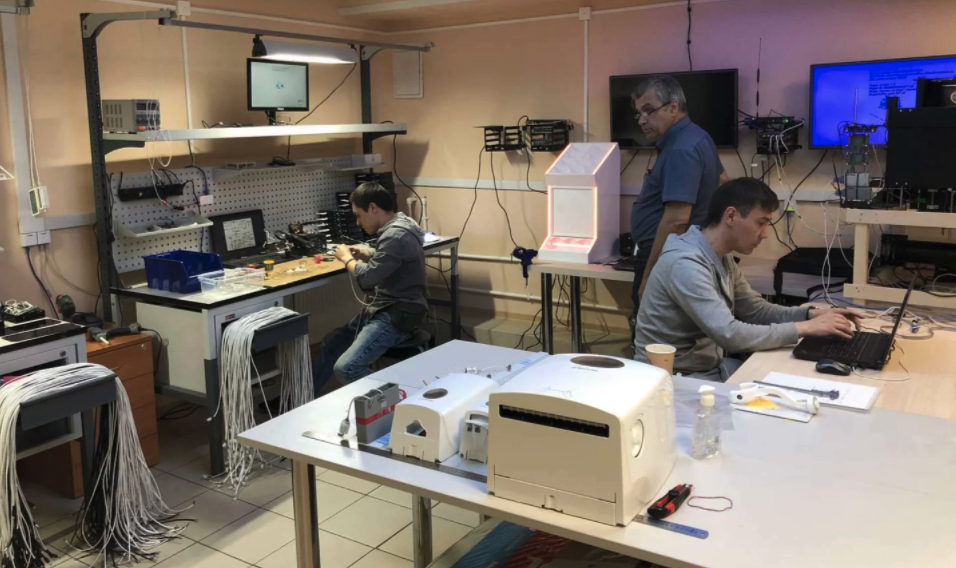
The service module controls all types of interaction with service companies servicing coffee machines. It does this through a service mobile application and a dispatch center. All applications, service certificates, checklists, ordering of spare parts, consumables, and other documents, are maintained using standard electronic forms that are stored in a single customer database. Closing of service acts occur with the help of an electronic signature of the responsible employees at points of sale. The customer has access to the service contractor’s operational analytics of compliance with the terms of the contract for the maintenance of coffee machines and other equipment of the trading floor (for comprehensive service maintenance).
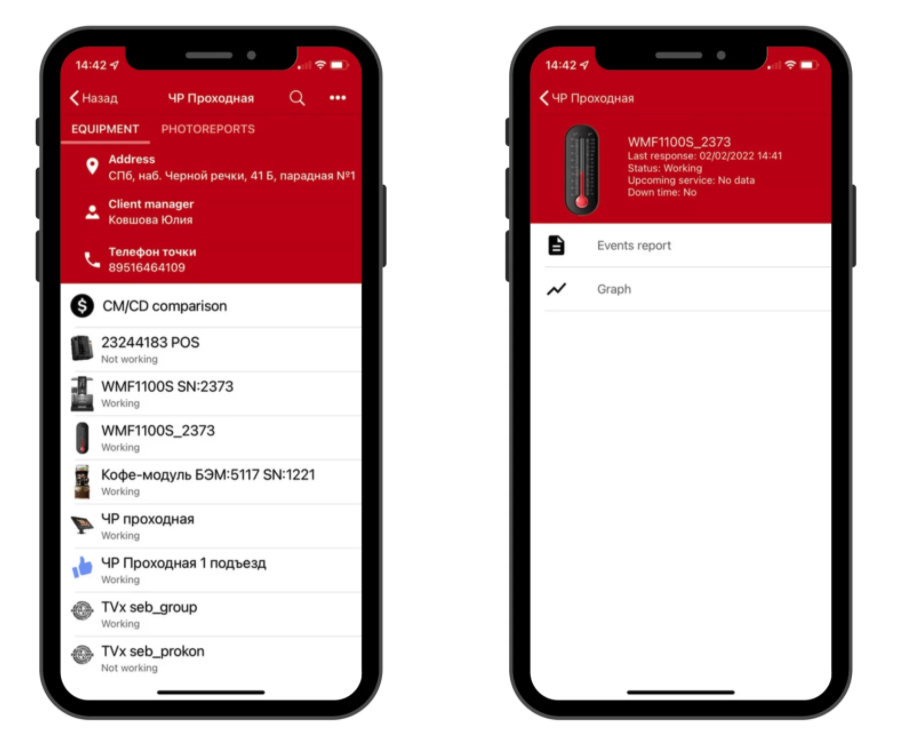
The corporate module exchanges information between all participants involved in the customer’s coffee business. This is a mobile service application (it is more advanced than the service module application) in which communications between different groups of respondents are configured. Both store employees and suppliers of goods and services can exchange information with each other.
They are given the opportunity to ask questions with a guarantee of feedback, create tasks for counterparties, and also—when there are deviations from regulations—receive tasks from the operating module, with automatic closure after the completion of the necessary procedures. It also provides training and rapid testing of employees. The module includes additional options: “auto-order,” “automated merchandising” and “cleaning control” (which is relevant for points of sale that provide customers with the opportunity to use bathrooms, for example, at gas stations). This module is best suited for solutions such as Intelocate, Bitrix24, and others and can be implemented according to various monetization schemes.
The client module is based on an application through which clients can pay for coffee, set up individual recipes for coffee drinks (increase or decrease the strength of the drink, change (within reasonable limits) the amount of water, milk, or milk foam).
The mobile client application allows for:
a) the implementation of various promotional mechanics related to the purchase of coffee;
b) targeted offers from the retail chain, including personal offers (birthdays, individual pre-orders, delivery orders, etc.);
Naturally, such a client mobile application allows you to implement customer feedback, which helps business owners respond flexibly to their customers’ requests. It is important that the options for implementing my “coffee” client mobile application allow for its seamless integration with similar corporate customer products, that is, use it under a white label.

Conclusion: When designing your own coffee-to-go business, I strongly advise retail chains management not to waste time looking at fragmentary telemetry solutions. Instead, they should roll up their sleeves and create their own automated systems for managing their coffee business. In this case, I am sure that in the next 3-5 years, the efforts of any retail chain to create its own coffee business will pay off tenfold.
Leave a Reply